
 Back
Back
.png)
Running a museum, zoo, aquarium, science center or other cultural organization means managing a lot of moving parts, often with limited time, staff and resources.
This year, we connected with more than 250 cultural organizations, and one challenge kept coming up:
How can teams spend less time managing everyday operations and more time serving their visitors and communities?
From field trips and check-in to visitor engagement and reporting, many organizations are facing familiar challenges that create unnecessary manual work.
As you plan for 2027, we'll explore:
- 5 operational priorities worth revisiting before year-end
- Where to start with your 2027 planning
- How to make 2027 easier on your team
5 Operational Priorities Worth Revisiting before 2027 Even Begins
While every organization has different needs, our conversations pointed to five common operational challenges — and opportunities to make them more manageable.
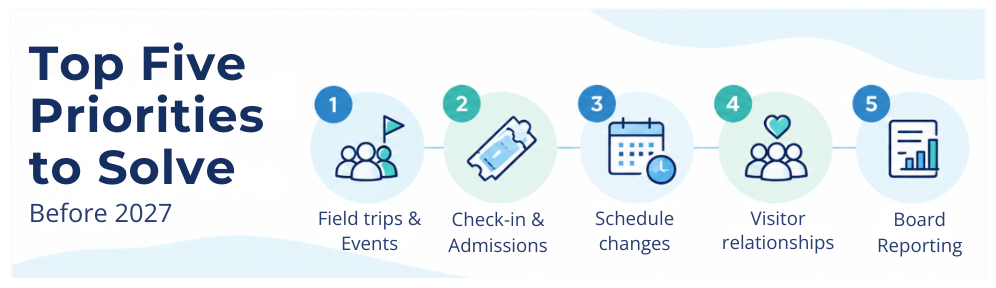
1. Field trips and events shouldn’t live in your inbox
From school field trips to group visits and special events, managing bookings can mean juggling emails, spreadsheets and manual follow-up.
As requests come in, staff need to keep track of schedules, registration details, capacity and payments. When that information lives in different places, even simple tasks can require extra coordination.
Where to focus: Look for ways to manage field trips and events from booking through the visit, with fewer handoffs and less time spent chasing down details.
Bringing booking information and related workflows together can help staff stay organized and spend less time on administrative follow-up.
2. Check-in shouldn’t mean jumping between systems
Your front desk team has enough to manage without switching between tools or re-entering information just to help a visitor.
When admissions, ticketing and membership details are difficult to access, routine transactions can take longer than they should. That creates extra work for staff during an already busy part of the visitor experience.
Where to focus: Give staff easier access to the information they need when visitors arrive.
With admissions, ticketing and membership information more readily available — along with mobile check-in and sales options — teams can spend less time navigating systems and more time welcoming guests.
3. When plans change, your team shouldn’t be left guessing
Closures, cancellations and last-minute schedule changes are part of running a cultural organization.
But figuring out which bookings are affected and what needs to happen next shouldn't require hours of calls, emails and manual tracking.
When schedules, capacity and registration details are difficult to find, even a small change can create a lot of additional work.
Where to focus: Make it easier for staff to review booking information and identify which reservations may be affected when plans change.
Having that information available gives your team a clearer starting point for coordinating next steps instead of starting from scratch.
4. Visitor relationships shouldn’t end at checkout
A ticket purchase tells you someone visited. But what happens after that?
Did they return for another experience? Register for a program? Become a member? What might encourage them to stay involved?
Cultural organizations want a better understanding of visitor engagement, but building that picture often means reviewing information across different activities.
Where to focus: Give your team access to admissions, membership and program registration information that can help them understand how visitors engage over time.
By reviewing that information together, staff can build a fuller picture of visitor relationships and identify opportunities to encourage repeat visits, program participation and continued engagement.
5. Board reporting shouldn’t cause a scramble
Preparing reports for leadership and board meetings can become a time-consuming process, especially when staff need to gather numbers from multiple places.
Leaders need information that's easy to review, with enough detail to answer questions and support decisions. But pulling everything together shouldn't take time away from other important work.
Where to focus: Consider how easily your team can access and organize the revenue information leadership needs most.
Reporting tools and data exports can help teams pull together a clearer picture of performance, with the numbers to back it up — so less time goes into gathering information and more into making informed decisions.
Where to Start With Your 2027 Planning
You don't have to tackle every operational challenge at once.
Instead, start by looking at the processes that create the most unnecessary work for your team.
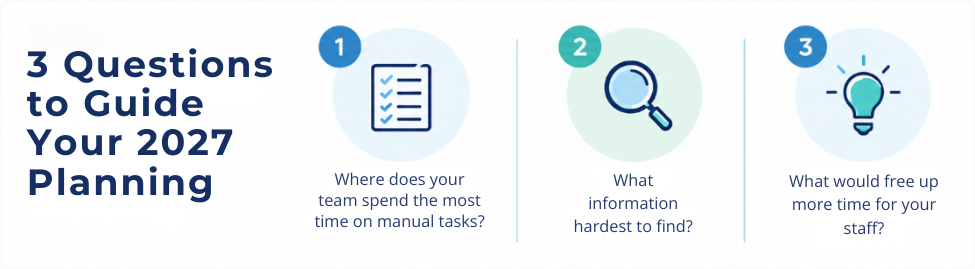
A few questions can help guide your priorities:
- Where does your team spend the most time on manual tasks? Look for repetitive work, duplicate data entry and administrative follow-up.
- Where is information hardest to find? Consider the processes that require staff to switch between tools or piece together details.
- What would make the biggest difference for your staff? Focus on improvements that could free up time, reduce frustration or make everyday workflows easier to manage.
The goal isn't to change everything. It's to identify where simpler workflows could make a meaningful difference.
Make 2027 Easier on Your Team
Whether you're managing field trips, welcoming visitors, coordinating schedule changes or preparing reports, small operational improvements can add up.
And for lean teams, getting time back from everyday administrative work means more time for the visitors, programs and communities at the heart of your organization.
Doubleknot helps cultural organizations simplify admissions, field trips, events, memberships, programs and reporting — so teams can spend less time managing the work behind the scenes.
Explore what's possible with Doubleknot