 Back
Back
Museums have long been places where communities come together for enjoyable yet educational experiences, and they still serve that purpose today. In a 2025 survey, only one in every five American adults said they never visit museums, and the majority of respondents who do visit museums (whether frequently, occasionally, or sporadically) prefer to do so with their family and friends.
This contemporary tendency toward social connection underscores the importance of museum community engagement. In this guide, we’ll dive into basics and best practices for engaging your museum’s community in the 2020s and beyond, including:
- Museum Community Engagement FAQ
- The Best Community Engagement Strategies for Museums
- Additional Resources on Museum Community Engagement
With the right engagement methods and tools on your side, you’ll be well on your way to helping all of your museum visitors have a standout experience. Let’s get started by answering a few common questions about museum community engagement.

Museum Community Engagement: Frequently Asked Questions
What is museum community engagement?
Museum community engagement encompasses all of your museum’s efforts to bring visitors, members, and donors into your organization’s fold and keep them involved in various ways over the long run. The goal is to inspire interested individuals to come through your doors (both physical and virtual) and have memorable educational experiences that lay the groundwork for your museum to fulfill its mission.
The most important aspect of community engagement to keep in mind is inclusion. Museums of the past, especially those focused on art and history, developed a reputation for gatekeeping their cultural experiences. But for modern museums like yours to thrive, you need to flip this narrative and extend access to your experiences to every community member, no matter their age, gender, race, ethnicity, ability, socioeconomic status, or any other aspect of their identity.
Why is museum community engagement important?
If your museum successfully engages its community, you’ll experience various benefits, such as:
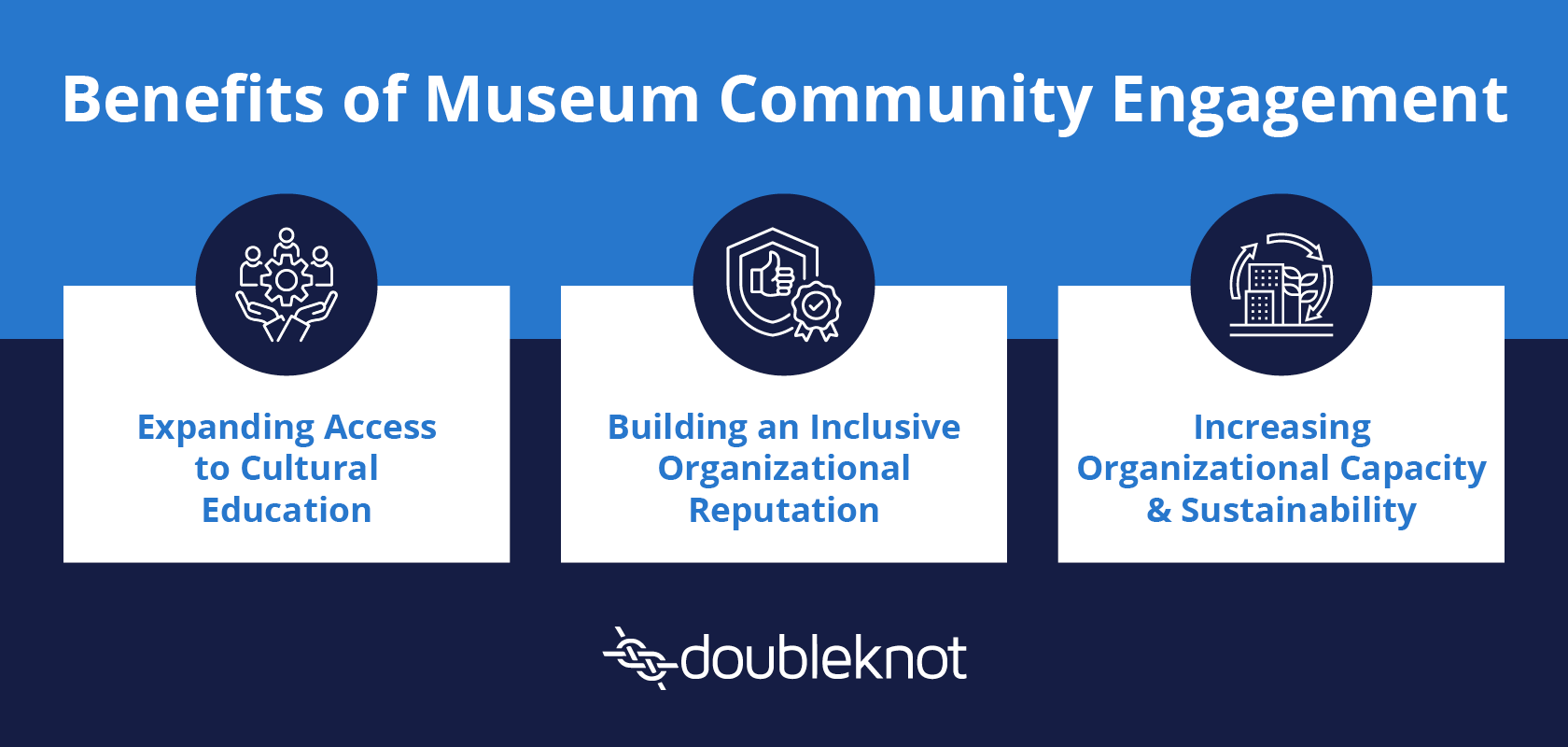
- Expanding access to cultural education. There is a reason why museums are popular destinations for school groups and tourists. Museums provide a cultural snapshot of a specific area, helping visitors learn about the location while enjoying a new experience. When you engage your community, more people can have this experience—for the first time and multiple times as they deepen their involvement.
- Building an inclusive organizational reputation. Although different events and exhibits may appeal to different supporters, most museums have a target audience of “the general public,” as they allow everyone to visit and connect. Broad engagement creates a sense of belonging among people of all ages and backgrounds and may even open up opportunities for issue-based advocacy from a trusted community institution.
- Increasing organizational capacity and sustainability. Your museum will be in a better position to weather challenges and grow over time if it has a committed supporter base. Not only is it more cost-effective to retain an existing supporter than to acquire a new one, but you’ll also bring in more consistent revenue from repeat visitors, recurring donors, and dues-paying members.
The best museums both reflect their surrounding communities and invite visitors to consider the past, present, and future of that community together. Engagement helps your museum thrive, and inclusion allows everyone in your community to engage.
How do you measure museum engagement?
Museum community engagement can be challenging to measure, since factors such as learning, satisfaction, and memorability are inherently subjective. However, there are a few categories of data that your museum can (and should!) track to assess your involvement approach and help you make adjustments as needed, including:
- Participation metrics: How many people are engaging with your museum in specific ways (visiting, donating, attending events, becoming members, etc.)?
- Revenue metrics: How much income are you generating from the various ways your community is getting involved with your organization?
- Marketing metrics: How are people hearing about your museum’s offerings, and what messages are compelling them to take the next step?
- Impact metrics: How do people express in measurable ways that different opportunities at your museum have affected them?
If you’d like to get more granular about the types of metrics that fall into each category, you can take the quiz below and match each metric to its overarching purpose!
The Best Community Engagement Strategies for Museums
Community engagement initiatives only benefit museums and their visitors when they’re actionable. Putting these theories into practice at your organization will take some planning, creativity, and flexibility—here are a few ideas to help you get started!
Segment Your Museum’s Audience
Although many museums try to appeal to the general public, it’s helpful to understand the different individuals and micro-communities that make up that public so you can tailor your approach accordingly. The best way to tap into these insights is supporter segmentation, or grouping already-engaged community members based on shared characteristics like:
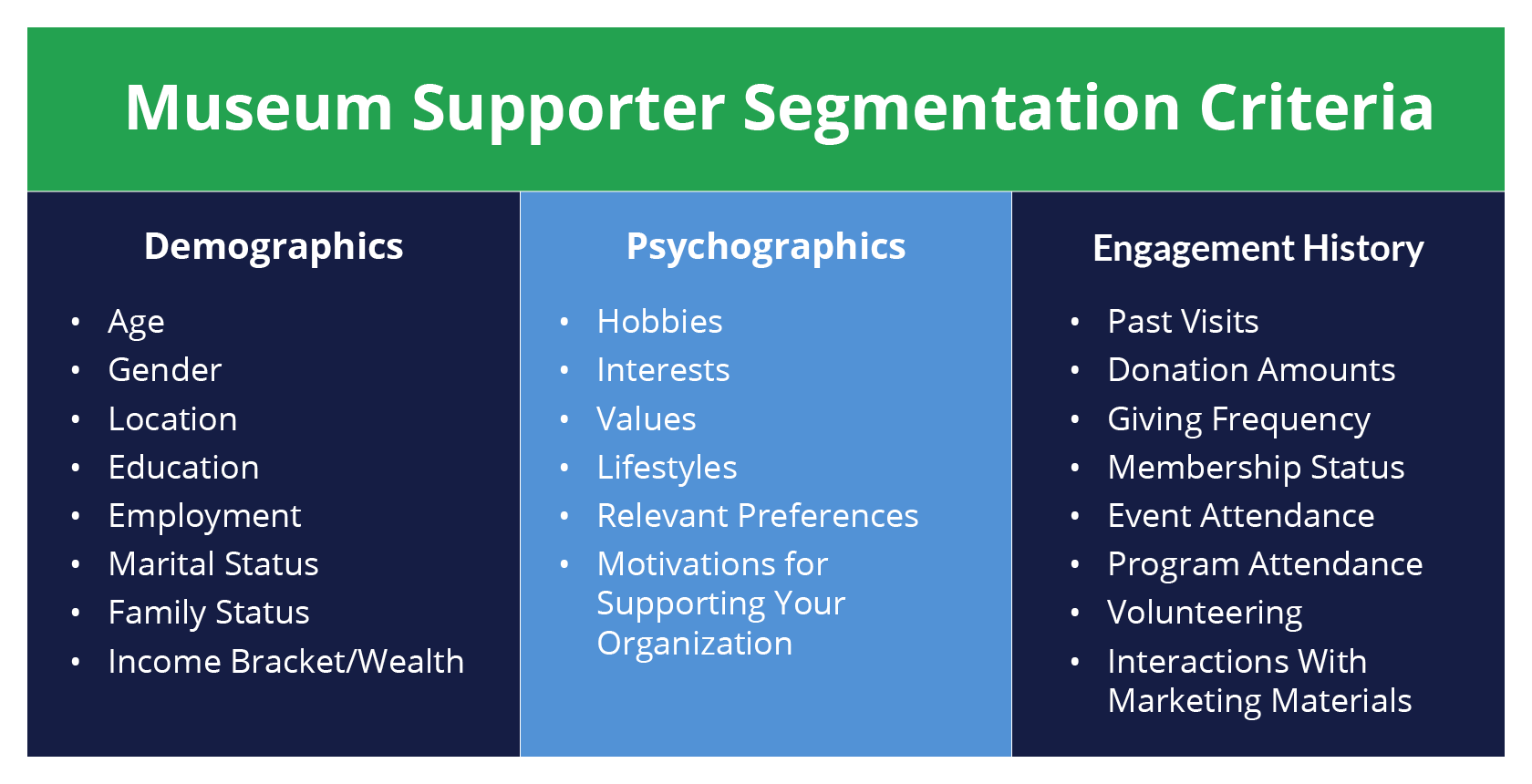
- Demographics: Age, gender, location, education, employment, marital and family status, income bracket or wealth
- Psychographics: Hobbies, interests, values, lifestyles, preferences, motivations for supporting your organization
- Engagement history: Past visits, donation amounts and frequency, membership status, event and program attendance, volunteering, interactions with marketing materials
In a 2025 survey of art museum directors, nearly 75% of respondents said their museums were actively investigating who they were and weren’t serving within their communities, and 59% designed engagement strategies specifically for underrepresented audience segments. Although these trends show that museums are recognizing the value of segmentation for community engagement, your team should always be careful to avoid stereotyping as you use audience group data to make strategic decisions.
Tailor Experiences to Different Audiences
Once you know what audience segments you most want to engage, you can design opportunities that specifically appeal to those groups. Let’s look at a few practical ways your museum can make this happen.
Engaging Diverse Age Groups
One of the most common ways to engage different age groups in your museum’s offerings is to offer tiered pricing for different demographics. If you discount admission for children, senior citizens, and college students, you’re much more likely to see those groups (and their friends and families) come through your doors. Creating special pricing categories for members, military members, or veterans is also popular—just make sure your ticketing system can handle all of these tiers.
Activities that appeal to visitors of specific ages can also draw those groups in. For example, you could:
- Create a dedicated kids’ area so parents know where they can bring their children to play or make a craft when they get tired of walking around your exhibits.
- Run a guided senior tour on weekday mornings that moves at a leisurely pace and offers an additional discount for visitors aged 65 and older.
- Host after-hours events for young adults with food, drinks, music, and special performances or tours that make for a fun date night or evening out with friends.
When people across every age group in your community know there is an experience at your museum designed specifically for them, they’ll not only have a good time but also feel like they belong, which can prompt them to come back.
Highlighting Underrepresented Voices
Because a major function of museums is to reflect the community, you should always make sure that you’re doing so accurately. Expanding your outreach by partnering with other community organizations can help your museum identify which voices haven’t been well represented, listen to their stories, and work with them to design relevant exhibitions or workshops to tell those stories to the rest of your supporter base.
In addition to creating your own content, your museum can offer opportunities for visitors to express themselves. Workshops, community art projects, and other special events can provide a space for every community member to bring their unique background to your museum, allowing participants to learn from each other and employees and volunteers to both educate and be educated.
Creating Accessible Spaces
The opportunities your museum offers will be most engaging when everyone can enjoy them, including community members with disabilities. More than that, museum accessibility is covered under the Americans with Disabilities Act (ADA), making equal access a legal issue as well as a community engagement consideration.
Accessible design covers both your museum’s facility and its digital presence. Within your building, make sure to incorporate:
- Functional elevators, lifts, or ramps anywhere stairs are necessary
- Lowered counters and wheelchair seating areas
- Braille plaques and tactile guide paths
- Closed captions for in-exhibit videos
- Designated quiet spaces
For online content, the Web Content Accessibility Guidelines (WCAG) are a strong starting point for ensuring ADA compliance. They cover actions such as checking the contrast between text and background colors on webpages and in digital marketing materials, adding alternative text to images, and providing closed captioning or transcripts for video and audio content. With a focus on accessibility, you’ll show community members that you’re considerate and want everyone to have a positive museum experience, while also following the law.
Leverage Multiple Channels for Community Outreach
Every organization—both for-profit and nonprofit—can benefit from marketing, and museums are no exception. For your community to take advantage of everything you have to offer, you need to spread the word about upcoming events, new exhibits, and other museum happenings.
Multi-channel marketing strategies are typically most effective because they create a variety of touchpoints for community members to convert. Here are a few popular channels and their purposes:
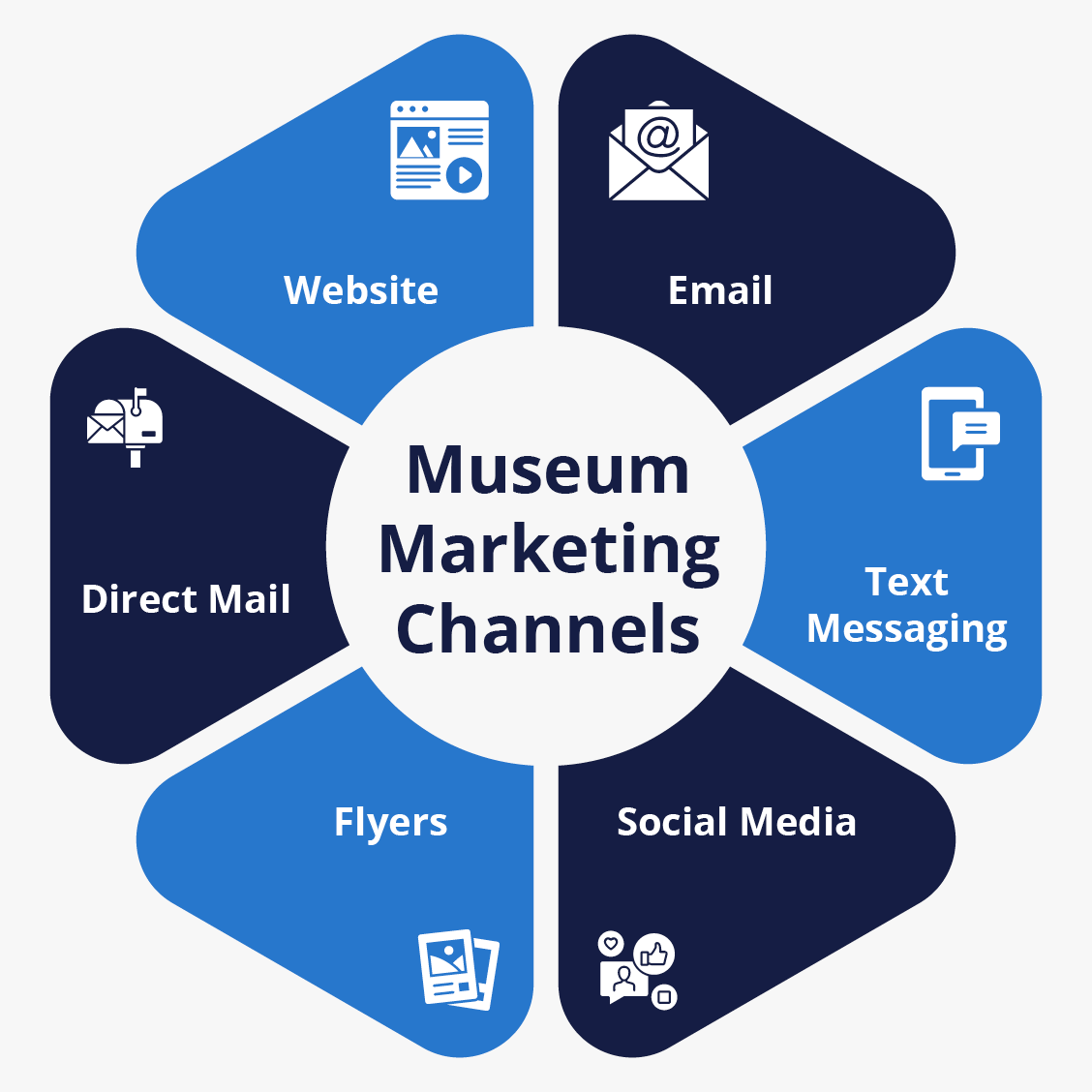
- Your museum’s website: As the hub of your organization’s digital presence, your website should clearly explain your museum’s backstory, upcoming events and exhibitions, essential visitor information, and how to access various ways to get involved (like your membership portal, online store, or donation page).
- Email: Many museums’ email strategies involve a combination of recurring newsletters and one-off blasts advertising specific activities. Just make sure not to overload supporters with emails and write attention-grabbing subject lines that stand out in their crowded inboxes.
- Text messaging: Texts are useful for brief, time-sensitive reminders (such as last calls for event signups or weather-related closures) since they cut through the noise of email. If you use an SMS platform with text-to-give capabilities, you can also collect donations through that channel.
- Social media: Social media has the unique benefit of two-way communication, so supporters can like, comment on, and share your content to expand your museum’s reach. Always tailor each post to its platform—for example, you might announce an exhibit opening via a public event on Facebook, a photo gallery on Instagram, and a short video on TikTok.
- Flyers: Hanging eye-catching flyers around your facility is a great way to let visitors know what’s coming up at your museum and convince them to return. You might also post flyers around your community to increase visibility, as long as other local organizations allow it.
- Direct mail: Contrary to popular belief, direct mail is not dead in 2026! It’s still an effective supplement to online communication, a good way to reach less tech-savvy supporter segments, and a highly personalized way to invite your museum’s most important donors to re-engage.
Getting the word out about museum happenings early, often, and in many ways will help you engage community members by not only increasing the likelihood of them visiting your museum but also communicating with them in a way they’ll be receptive to.
Collect & Apply Visitor Feedback
Once you’ve started bringing your community together at your museum, you can deepen your relationships with supporters by asking them for feedback on their experiences. Feedback collection and marketing strategies often inform each other. You may adjust your marketing strategy based on visitor feedback and send out feedback forms via several different communication channels.
More than that, collecting visitor feedback helps you plan events and create educational content that will resonate even more strongly. When you know what your visitors enjoy, what they think could be improved, and what new ideas they have for your museum, you can take those things into consideration for the future.
Start by sending a recurring survey (annually, quarterly, etc.) to your members to gather regular feedback from the most committed segment of your audience. Over time, you might also implement follow-up surveys after first visits, events, and educational programs to provide a natural opportunity for input while those experiences are still fresh in visitors’ minds.

Invest in Comprehensive Museum Management Software
Foundational to museum community engagement is an effective plan for museum management as a whole, which starts with leveraging the right tools. If you’re looking to revamp your museum’s tech stack to improve engagement and management, investing in an integrated platform like Doubleknot is your best bet.

Designed specifically for museums and other admissions-based nonprofits (zoos, aquariums, nature centers, etc.), Doubleknot’s complete software ecosystem includes tools for:
- Ticketing and admissions that support multi-tier pricing and capacity management.
- Memberships and fundraising to cultivate reliable revenue and relationships.
- Educational program planning for various audiences and age groups.
- Event registration that’s easily shareable across multiple marketing channels.
- Point of sale (POS) to unify online and offline sales-based engagement.
- Constituent relationship management (CRM) database and integrations for easy segmentation and tracking of metrics.
With access to so many supporter engagement capabilities in one user- and budget-friendly solution, it’s no surprise that 95% of Doubleknot customers renew their subscriptions from year to year. Will your museum be next to realize Doubleknot’s benefits?
Wrapping Up: Additional Resources on Museum Community Engagement
The strategies in this guide are just a few of the many ways your museum could start engaging its community more deeply. No matter the exact approach you take, remember to keep inclusion at the forefront, adapt your execution over time based on your collected data and feedback, and leverage the right tools (like Doubleknot’s integrated management system!) to ensure everything runs smoothly.
For more information on museum community engagement, check out these resources:
- Museum Fundraising: FAQ + 10 Strategies to Increase Revenue. Discover more ways to maximize involvement in and income from your museum’s fundraisers.
- How Your Org Can Navigate Challenges & Opportunities. Dive deeper into common changes you’ll need to manage as you develop your museum’s engagement strategy.
- Museum Software: FAQ + 13 Top Management Solutions for 2026. Explore all of our top picks for museum-specific platforms that can support your engagement efforts.